February 2024
Core skills: Designing, engineering and evaluating an interactive technology
Although our world becomes increasingly connected, meaningful connection subsides. Can we enchant an everyday object, to encourage connectivity in a disconnected world? For this project, I designed, built and evaluated an interactive embedded system called ‘Lobit’ with a small team of fellow students. Lobit is a remotely connected hoodie that allows its wearers to send digital ‘hugs’ to each other. With additional features that allow for sending and receiving voice messages, Lobit digitally connects people in a more meaningful way. My main roles during the project were first prototyper and second programmer.
Based on our theme 'interpersonal connection', we gathered insights, patterns and design considerations to create the context for generating solutions. Next, we brainstormed several solutions to how we can increase meaningful conntection through technology. Based on feasability and novelty, we settled on the 'digital hugs' concept.
Next, we created initial sketches, see the illustration below. To test the product at this stage, we conducted a simple and brief user study (n=3) to show the concept and its functionalities to potential users. This led us to the final concept: two remotely connected hoodies that sends a haptic sensation when one of the users hugs themselves. Users can additionally send and receive direct voice messages to one another and configure the device through an accompanying application.
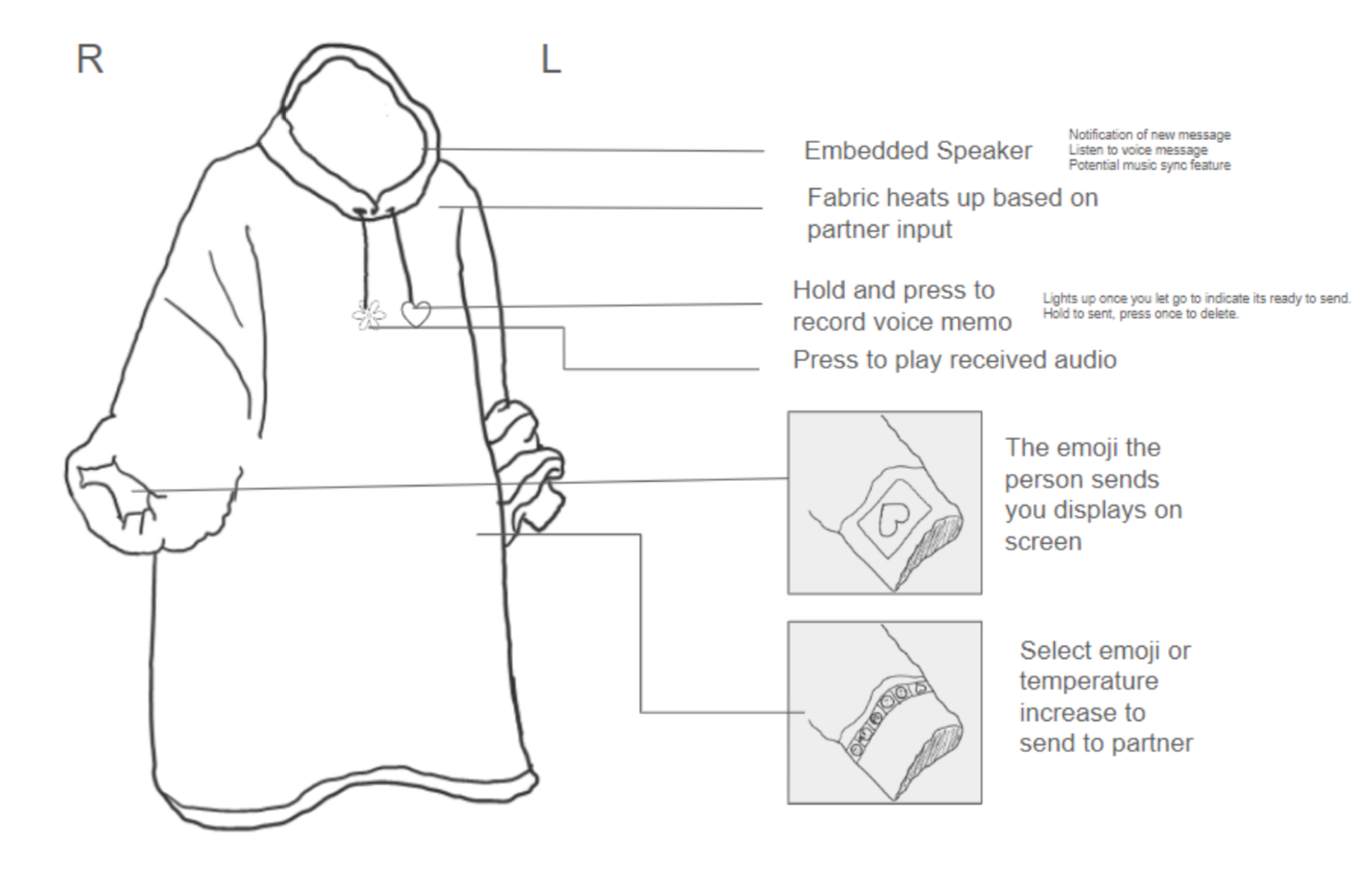
The design embodies the notion of tele-presence, where you feel like you are in the presence of somebody else, when in reality you're not [1]. Our design is not meant to replace social presence, but rather a more meaningful supplement to digital communication for two long-distance individuals.
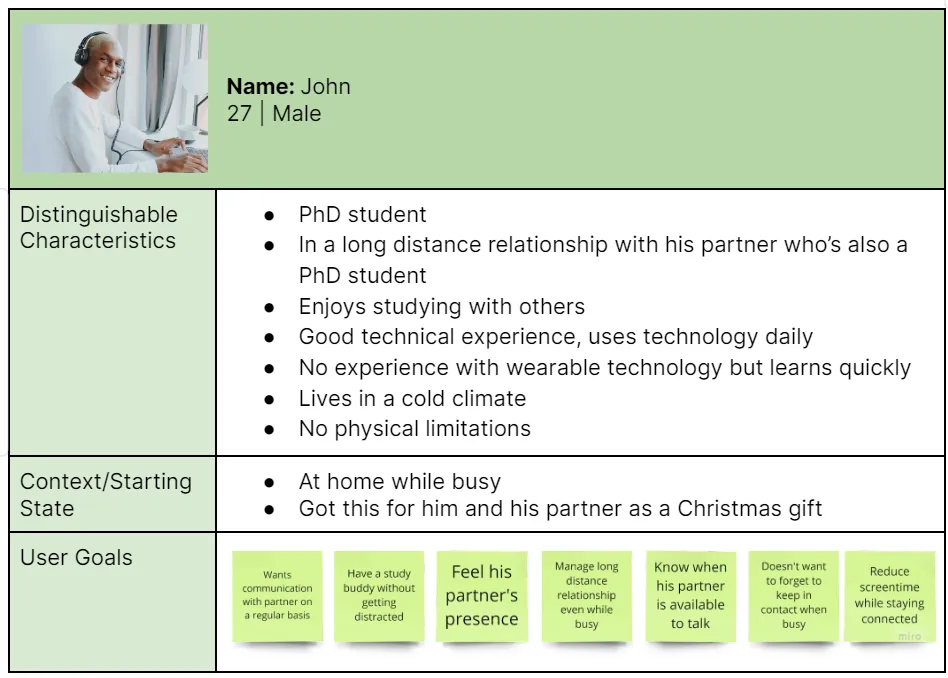
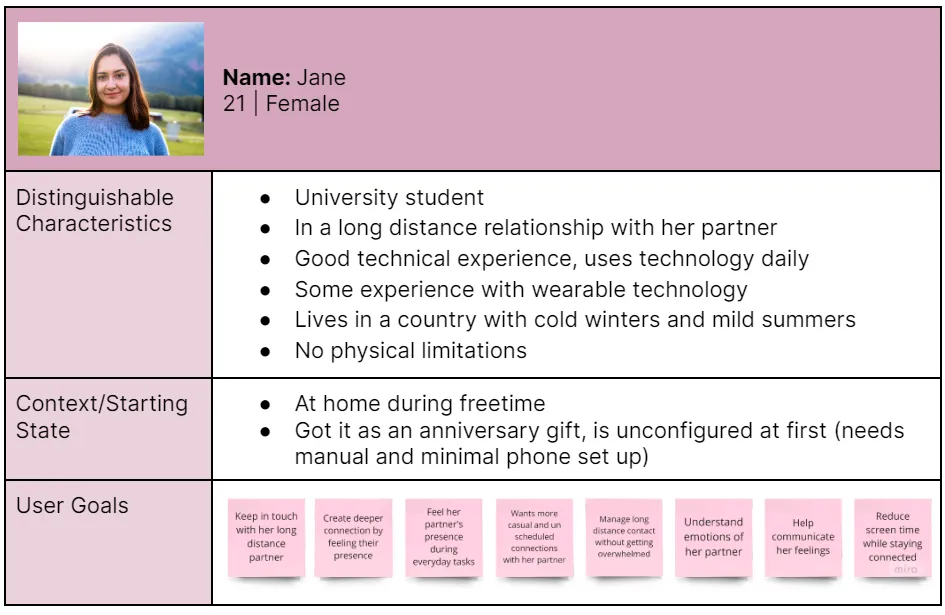
Next, we developed user personas to map the typical user of this concept:
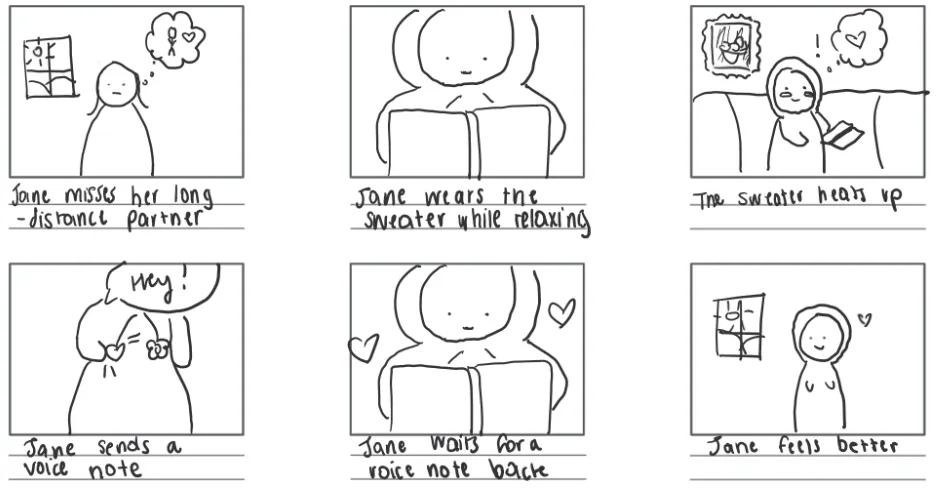
To concretionalize the user of our design, we created a storyboard and accompanying customer journey map.
We decided to name the product ‘Lobit’. This refers to the Surinamese word for Lobi, meaning 'love', while the 't' at the end creates the word 'bit', referring to the technical nature of this project.
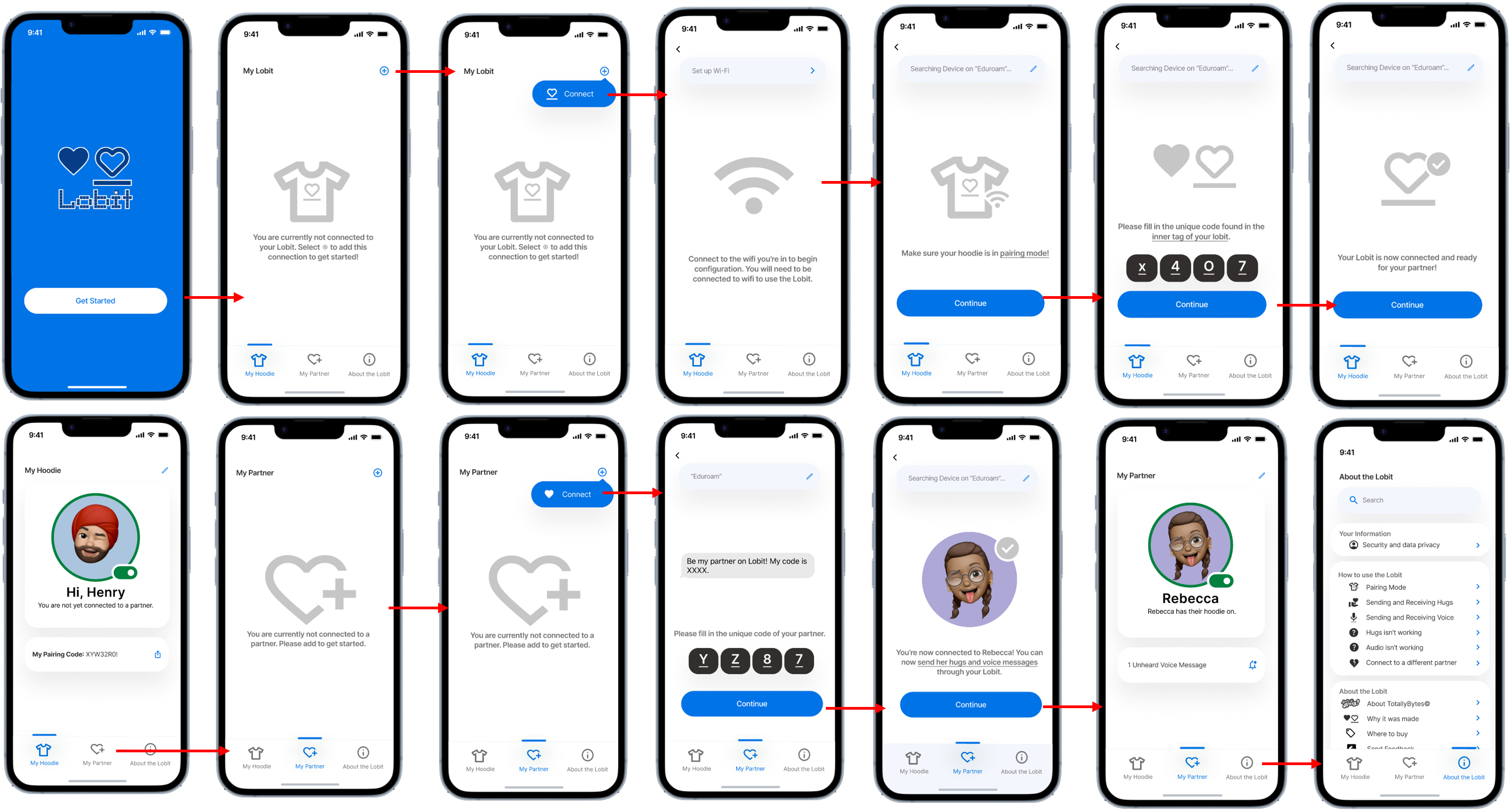
After finalizing the ideation stage, we made the first lo-fi prototype. The first physical prototype was made from old fabric, foam pieces secured with double sided tape, and clay to for the control buttons. Alongside, we developed wireframes in Figma for the accompanying application. With this prototype, we conducted the second user study (n=4), to determine optimal sensor placement and tested the wireframes based on usability and understanding and feeling of enchantment [3]. The most important takeaways were: Placement of the sensors should be in places you cannot accidentally hit. The focus of the heating should mimic a hug without being overwhelming, therefore they should be placed on chest and back. Ensure the encasing of the voice message buttons are obvious. Ensure the heating is adjustable. Participants responded enthusiastically to the inital prototype, which led us to feel confident we were headed in the right direction
Regarding the app wireframes, it lead to the changes: Add notifications for voice messages received and when other is wearing the hoodie. Improve guidance for setting the device up in the app (Device configuration). Create separate page for partner and own hoodie. Clarify that the product is for pairing only (no multiple connections). These final refinements led to the following hi-fi wireframes:
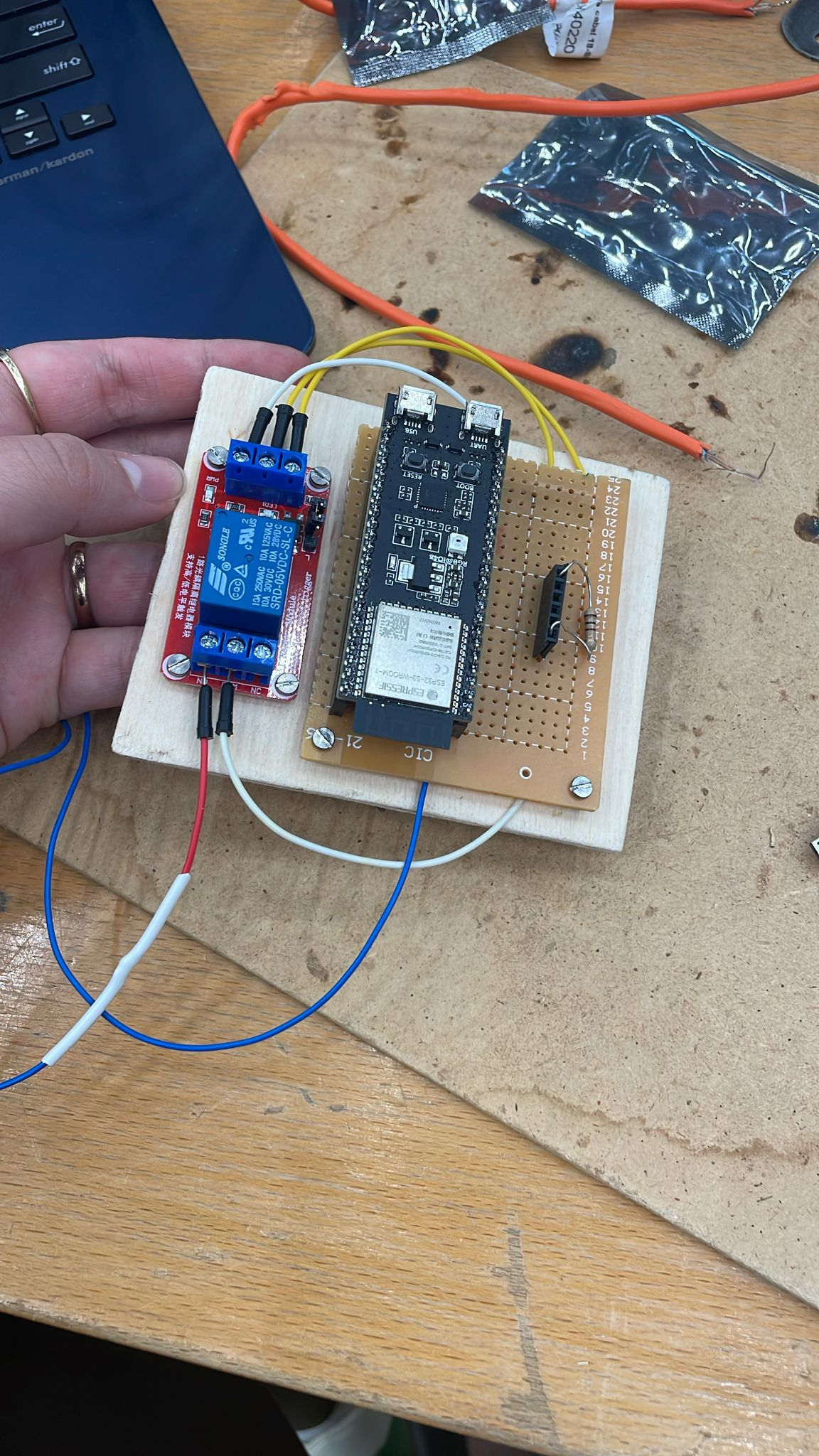
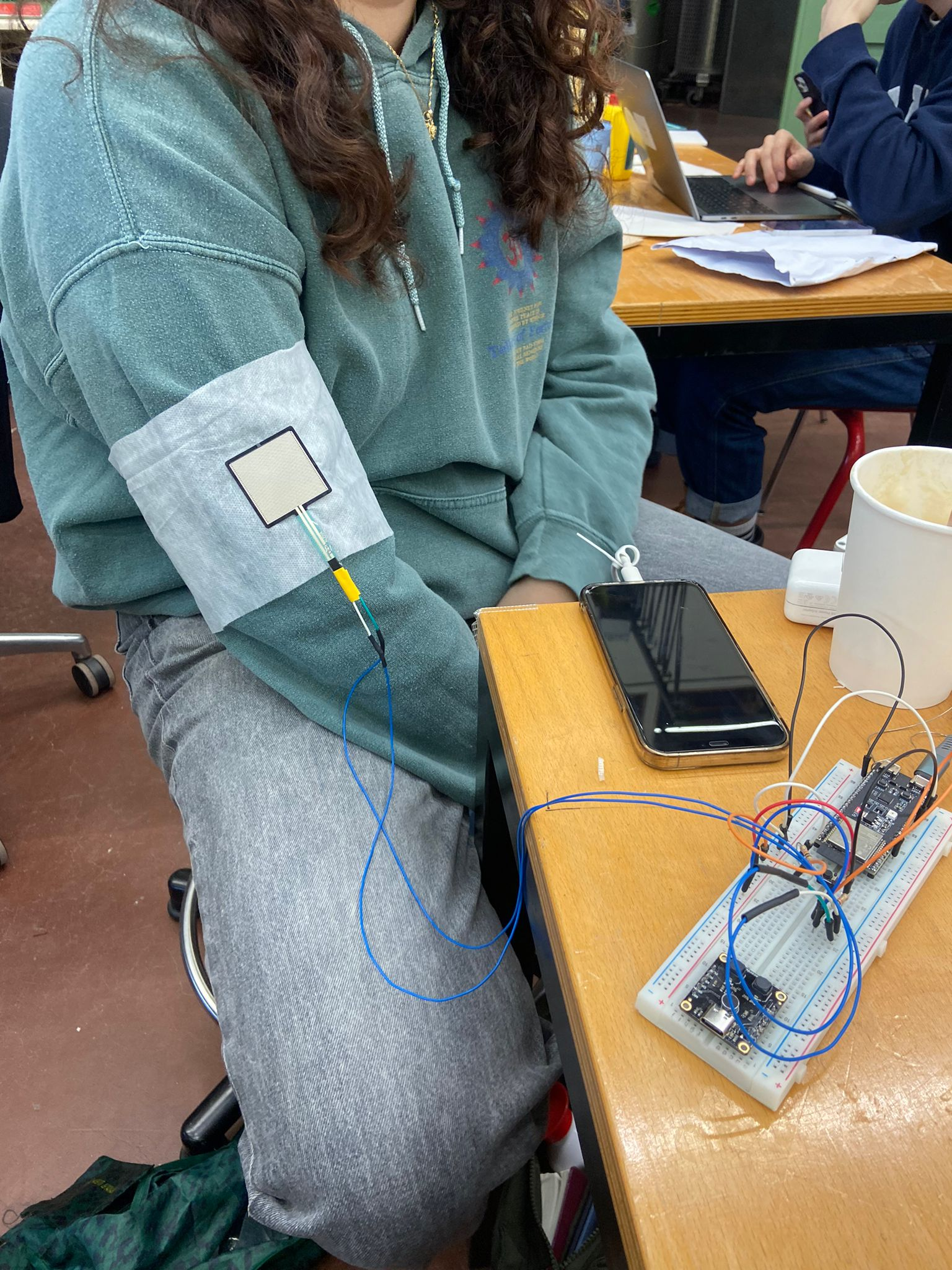
After refining the lo-fi prototype, it was time to build the hi-fi prototype. The electronics needed were: a hoodie, two Arduino ESP-32's, relay module, perfboard, wiring, sensor pads, powerbank, speaker, microphone and heating pads. Due to technical difficulties with the heating pads, we had to find an alternative source of haptic feedback. Instead, we used a small vibration motor.
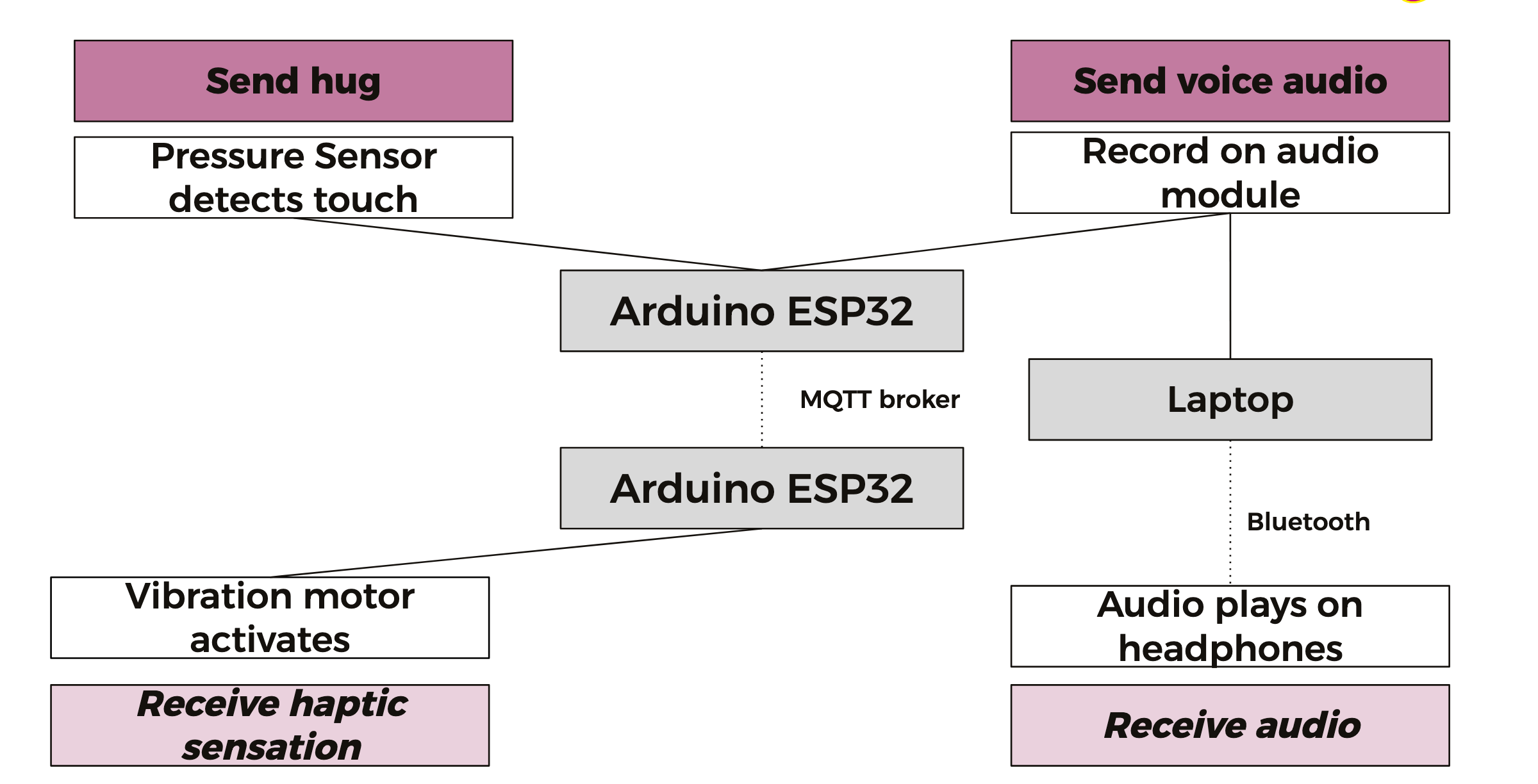
We configured the communication between the two ESP-32’s with Message Queuing Telemetry Transport (MQTT) which allows for efficient communication between devices (especially over constrained networks like WiFi) and supports fully symmetrical connection. The microcontrollers connect to a smartphone hotspot, accessing the MQTT broker hosted on a server. This way, the ESP-32’S can publish (send) and subscribe (receive) to specific topics on the broker.
When all circuits were finalized, they were souldered to perfboard and integrated into the hoodie.
The last step was to test our product for user experience and impact. Using a mixed-methods approach in a within-subjects design, we evaluated Lobit's impact on feelings of connectedness and enchantment compared to regular communication with a loved one. This lead to the following research question(s):
How can our enchanted everyday object encourage connectivity in a close relationship, compared to smartphone communication?
sSix individuals forming three pairs were recruited (one romantic and two platonic) who regularly communicate long-distance. The participants, with an average age of 22 and a relationship duration of approximately 2.3 years, were exposed to two conditions: using Lobit and using smartphones for communcation. Each session lasted about an hour, with the order of conditions randomized to control for any order effects.
Data Collection and Tools
Data was collected through checklists and semi-structured interviews. The Networked Minds Social Presence Questionnaire and an enchantment adjective checklist were used to quantitatively and qualitatively assess the participants' feelings of social presence and enchantment. Voice memos recorded the sessions, and transcription software helped in analyzing the qualitative data.
Results
Our study showed that Lobit significantly enhanced feelings of social presence and enchantment compared to smartphone communication. The average social presence score was higher in the Lobit condition (15.3) than in the smartphone condition (12.0). Participants felt more connected and attentive to their partners while using Lobit. Enchantment scores were also higher with Lobit, with participants experiencing more positive emotions such as joy and excitement. Interestingly, while Lobit improved perceived social presence and enchantment, inter-subjective symmetry was higher in the smartphone condition, suggesting that actual mutual understanding might be better in conventional communication modes.
The qualitative data supported the quantitative findings, with participants expressing a greater sense of connection and enchantment when using Lobit. The functionalities of sending hugs and voice messages were particularly appreciated, enhancing the emotional quality of the communication. However, some participants noted that the vibration could become annoying over time, and there were concerns about the practicality of heat as a substitute for physical warmth in a hug.
Overall, Lobit may offer a promising enhancement to long-distance communication, possibly fostering a stronger sense of social presence and enchantment than traditional text-based methods. However, the current study did not capture the significance nor effect size of the findings. Further research on incorporating tangible interactions into communication technologies are needed to discover the potential to deepen emotional connections between users. In general, this prototype is an expample of how we can incorporate the need for more nuanced and emotionally aware technological solutions.
Prototyping is generally defined as an experimental process [6], and I have seen why; it was a process of adaptation, testing out various approaches and designs to adapt to unforeseen issues, and that meant letting go of ideas that weren't always feasible. Now having been through the whole process, I think if I were to do a similar project for a second time we could progress much faster, underlining the importance of having been through this process in the first place.
Overall, it was awesome we got to bring our ideas into reality. I am proud of what we managed to achieve in such a short time frame, especially considering how little familiarity we had with such a project. I have learned a great deal and this project was such an exciting journey.